Descripción
E10 DC Servo Toll Barrier Gate
A narrow-body DC servo barrier gate for toll islands. The 295 mm wide cabinet carries a 100 W servo drive and opens from 0.6 s on a short boom.
Request a QuoteView SpecificationsE10 is a high-speed DC servo barrier gate built for toll, parking and logistics lanes where the arm must clear quickly and the cabinet must stay out of the way. It opens from 0.6 s, holds 100% duty, and reduces the mechanism to three parts: mechanical, motor and control unit.
TL;DR
- Model: E10, high-speed automatic barrier gate, DC servo drive with SFMCU unit.
- Speed: 0.6 s at 2.5 m to 6 s, adjustable in the controller.
- Duty: 100% rated, with 100% more torque, held through every cycle.
- Footprint: 330 × 295 mm footprint and 942 mm high, for lanes with limited island space.
- Life: lab tested beyond 10 million open/close cycles, patent protected.
- Supply: MOQ 1 set, OEM and ODM, shipped to more than 50 countries.
What the E10 is
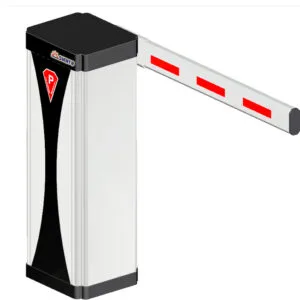
The E10 belongs to the SUNFRE high-speed barrier family alongside the S10 and K10, and shares their drive architecture: a DC servo motor controlled by the SFMCU drive unit, with position read from a 1024-pulse encoder rather than from limit switches. What separates it is the cabinet. At 330 mm long and 295 mm wide it takes a narrow island footprint, which is the constraint that decides the model on a retrofit or a narrow toll island.
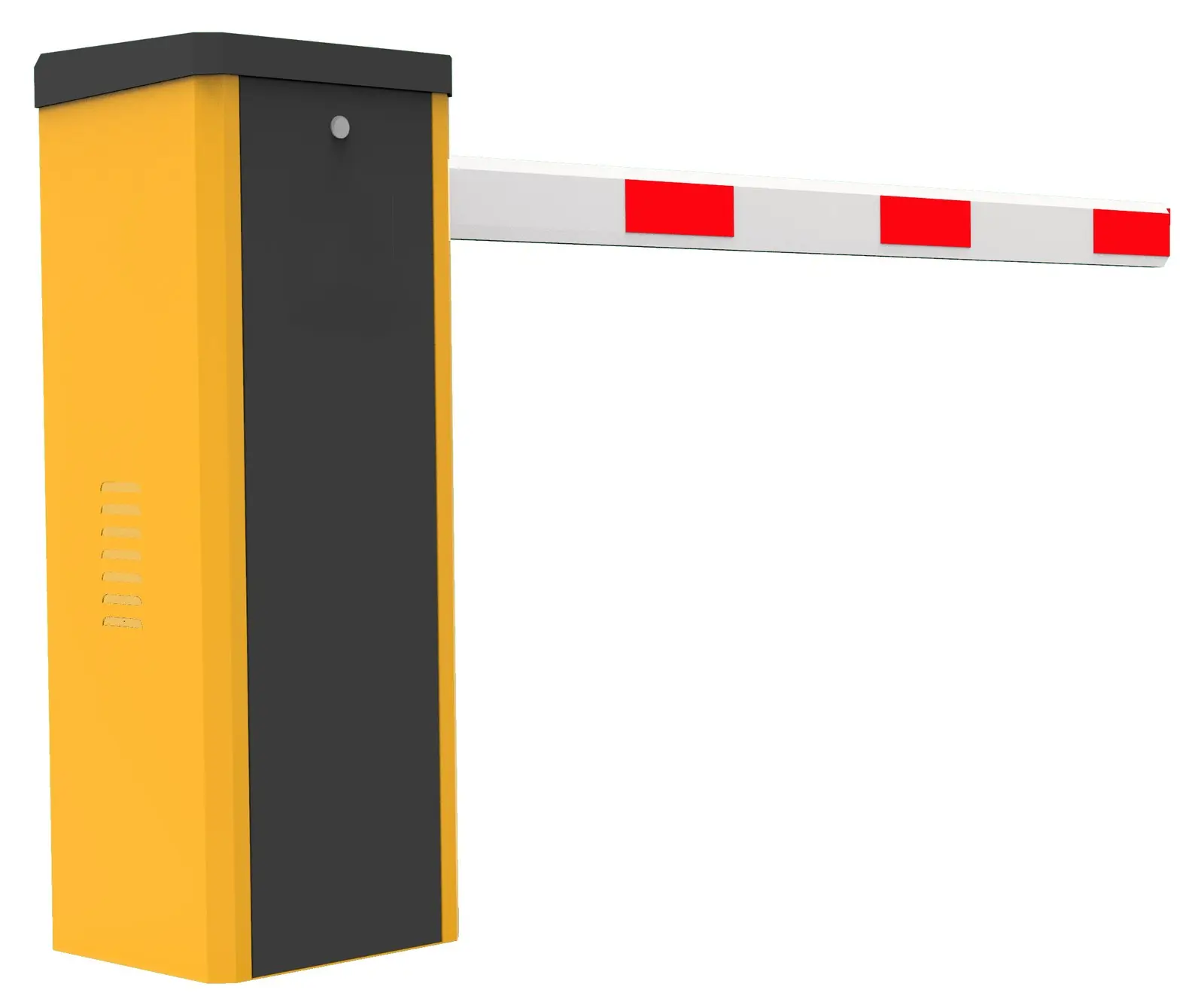
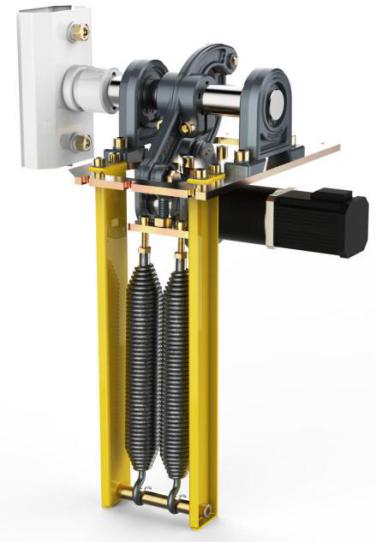
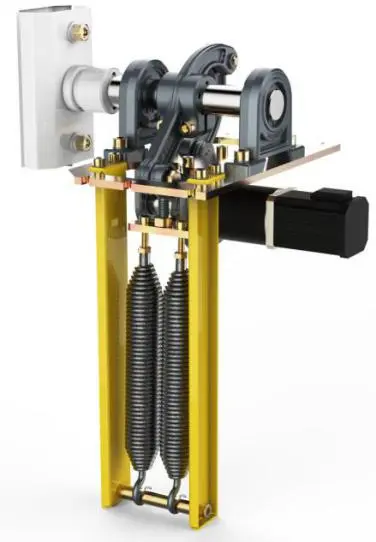
Because there is no limit switch and no sensor in the arm path, the mechanism reduces to three assemblies, and the open and closed positions are taught in the controller. That is what allows the same cabinet to carry a 2.5 m arm at 0.6 s and a 6 m arm at 2.5–5 s without a hardware change.
Key features
- 0.6 s at 2.5 m, adjustable to 6 s. Cycle time is a controller parameter, so one model covers a fast toll lane and a slower wide entrance.
- 100% more torque, 100% duty. The servo and SFMCU hold torque through every cycle, which is what allows non-stop operation without derating.
- No sensor, no limit switch. Three parts only: mechanical, motor and control unit; the encoder reports position continuously.
- Narrow cabinet. 330 × 295 mm footprint leaves island space for readers, loops and signage.
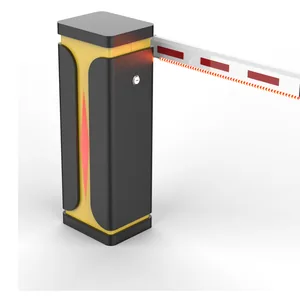
- LED status light. Green when the arm is open, red in every other state.
- Auto-recovery and optional auto-open. Manual arm lift on power failure with automatic resume; a supercapacitor pack can lift the arm without an operator.
- Ten million cycles, patent protected. Lab tested beyond 10 million open/close cycles without performance degradation.
Specifications
| Model | E10 |
|---|---|
| Type | High-speed automatic barrier gate, bi-directional |
| Drive | DC servo, 100 W, 1024-pulse encoder (brushless DC available on request) |
| Boom | Straight 2.5 m to 6 m; folding and fence arm optional |
| Opening time by boom | 0.6 s at 2.5 m · 0.9 s at 3 m · 1.5–3 s at 4.5 m · 2.5–5 s at 6 m |
| Speed range | 0.6 / 0.9 – 6 s, adjustable |
| Duty cycle | 100% |
| Drive system | SFMCU |
| Supply voltage | AC 220 V, or DC 24 V |
| Frequency | 50 / 60 Hz |
| Housing dimensions (H × W × D) | 942 × 295 × 330 mm |
| Weight (without boom) | Gate 42 kg · mechanism 21 kg |
| Protection class | IP54 |
| Operating temperature | −35 to +70 °C |
| Package | 102 × 38 × 48 cm |
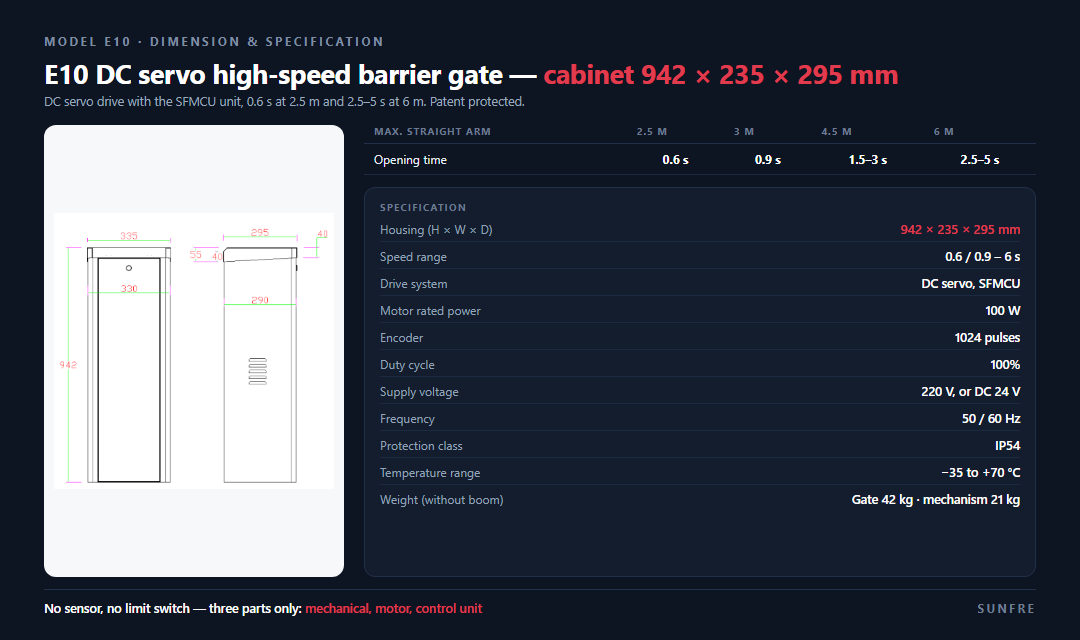
Selection Guide & FAQs
How do I match opening speed to boom length and traffic volume?
Speed is set by the lane, not by the datasheet. A single lane runs a fixed cycle: the arm opens, the vehicle clears the loop, the arm closes, and a safety interval passes before the next arrival. Above roughly 600 vehicles per hour on one lane, as at a toll plaza or a paid parking exit, the sub-second setting keeps the queue at the payment point rather than at the boom, and it needs a short arm because a long boom cannot complete that cycle without unacceptable stress. Between 300 and 600 vehicles per hour, 0.9 s on a mid-length arm is the usual fit. Below 300 vehicles per hour the arm is not the constraint, and a slower setting reduces wear without costing throughput.
Two rules follow. Fix the boom length from the opening width first, then take the fastest setting that length allows, because a 0.6 s arm on a 6 m opening is a warranty claim rather than a faster lane. Second, do not treat a faster setting as reserve capacity for peak hours, since the mechanism is rated for continuous duty at its specified speed.
Brushless DC vs. Servo Motor: How to Choose the Right Drive?
SUNFRE supplies the E10 with either drive, and the choice is a commercial one rather than a question of which is newer. Both use the same cabinet, boom, clutch and gearbox, so the lane geometry and the civil works are identical whichever drive is fitted; only the motor and the control board differ.
Brushless DC, the value baseline. A brushless drive delivers a reliable cycle at the lowest unit cost, carries no brushes to replace, and comfortably covers the traffic of a residential compound, a staff car park or a light commercial entrance where the arm is not the bottleneck. Where capital cost per lane is the deciding factor and the arrival rate stays in the low hundreds per hour, it is the rational specification rather than a compromise.
Servo, the control advantage. The servo drive adds four things that matter at the specification stage. Position feedback comes from a 1024-line encoder, so the controller knows the arm angle continuously rather than only at two limit points. The motor holds 100% duty at 100 W, so it does not derate during a peak that lasts all morning. Fast cycles become practical without that derating, from 0.6 s on a short boom to 2.5–5 s on a 6 m arm. And because torque is measured and controlled continuously, the anti-crush and anti-ram logic acts on measured resistance rather than waiting for a limit switch, which is what lets a servo lane absorb a vehicle nudging the arm without dropping out of service.
How to decide. For a high-flow toll plaza, a logistics park with continuous truck traffic, or any lane where the arm sits in the queue and a stoppage is unacceptable, specify the servo drive. For a standard car park, a residential entrance, or a project with a fixed budget and moderate traffic, the brushless drive is a dependable foundation rather than an obsolete option. Both are held in stock, and a lane specified with either drive can be re-configured later without changing its foundation.
How do induction loops, radar and torque limiting work together to stop the arm hitting a vehicle?
Detection is layered because no single device answers every case. The induction loop holds the arm open while a vehicle sits over it. The photoelectric beam interrupts before contact and catches people and objects the loop cannot see. The servo torque limit reads motor current and reverses on resistance. Radar adds a detection volume rather than a line, which is why it is specified where pedestrians share the lane or where a loop cannot be cut into the surface.
Wiring follows that order. The loop detector closes a dry-contact input that holds the arm open while the contact remains closed. The beam and radar connect to the normally-closed safety input, so a broken beam or a failed sensor fails safe and reverses the arm during closing. The torque limit needs no external device because it is measured inside the drive.
Design and build
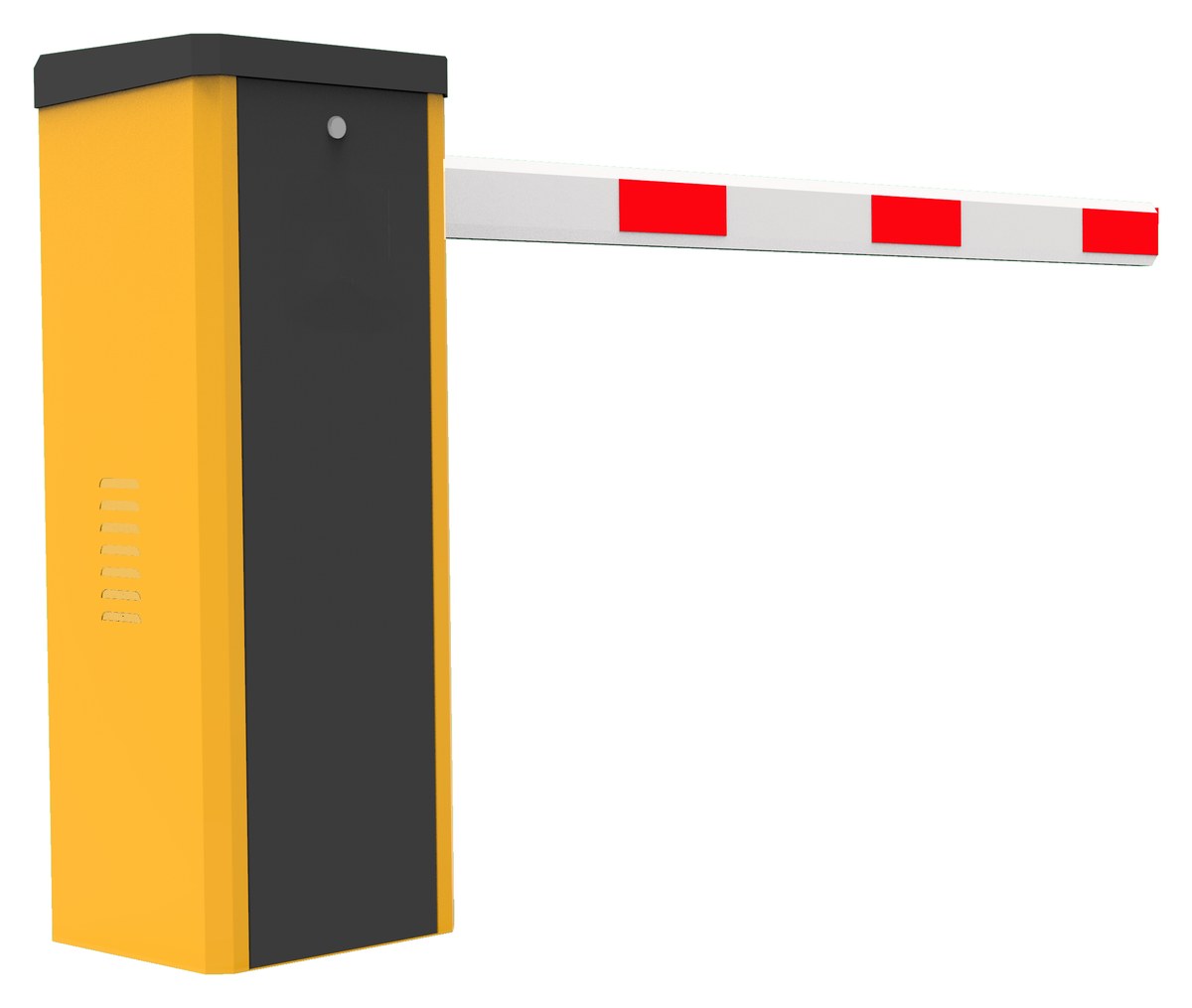
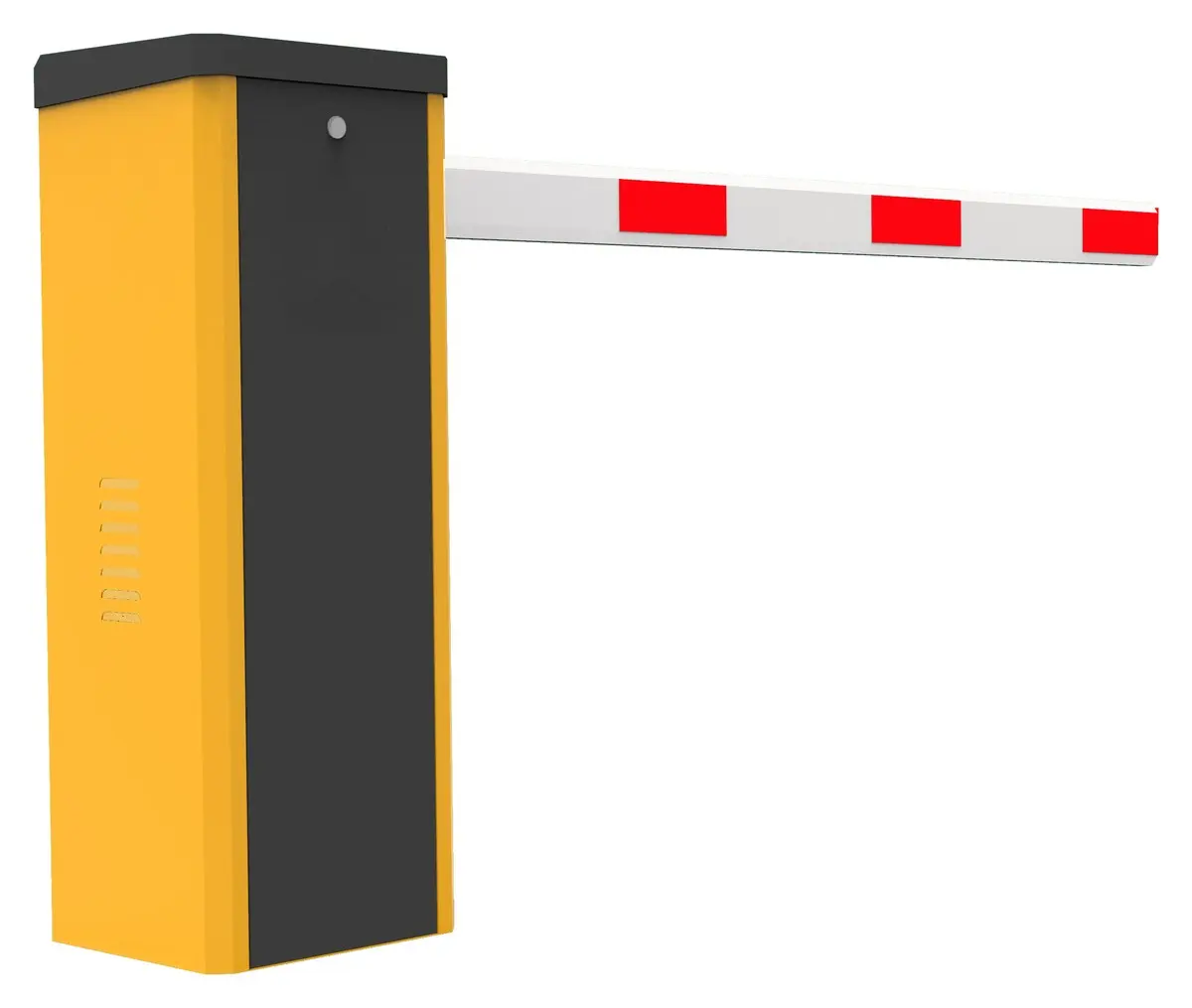
The cabinet is a slim welded shell with a removable front panel that exposes the controller, transformer and clutch without dismantling the boom. The boom carrier runs on a factory-set mechanism with no balance spring to re-tension, and the arm is handed on site so one part number covers a left-hand or right-hand lane. Galvanised and powder-coated parts carry the anti-rust treatment, and the whole assembly is built around service access rather than around a sealed gearbox.
Manufacturing and testing
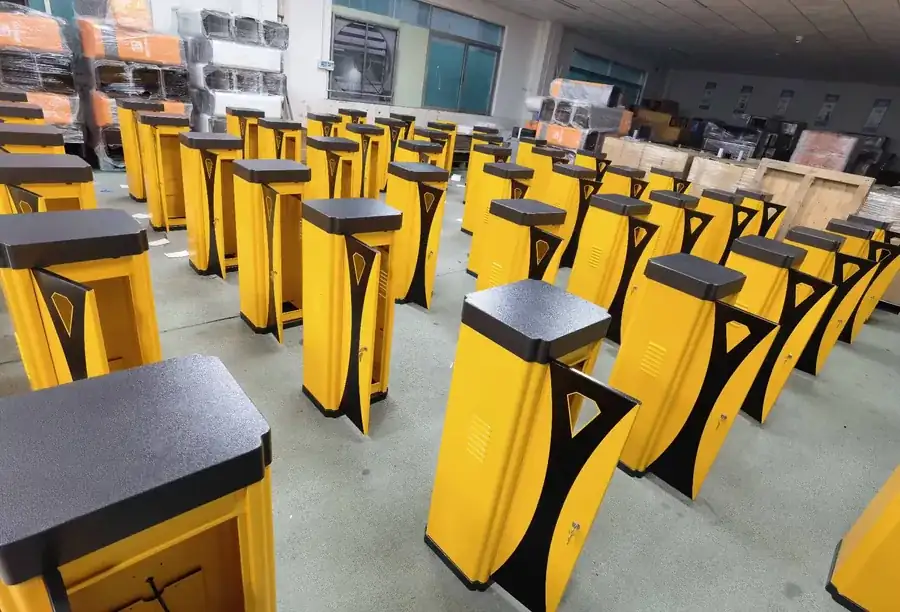
Machining, cabinet fabrication, assembly and functional testing of the barrier gate are carried out in the Shenzhen facility. Running these steps in house keeps build quality consistent, makes specification changes straightforward, and lets the factory support spares and service directly rather than through a third party.

Compliance and quality control
Every barrier gate is functionally tested before dispatch, including boom travel, encoder position feedback, obstruction reversal and safety logic. Cabinets are powder-coated steel with galvanised internal parts. Protection rating is IP54 and the operating range is −35 to +70 °C. The warranty is 18 months, extended to 20 months for long sea freight.
Certificates of Compliance and EMC test reports for SUNFRE access equipment are issued by Shenzhen United Testing Technology Co., Ltd. (UNIA). Full copies and test reports are available on request.
Applications
- Toll plazas and weigh stations where island space is tight.
- Paid parking exits where the arm must clear between arrivals.
- Logistics and distribution sites with mixed vehicle heights.
- Airport and port access points with high arrival rates.
- Retrofit lanes where a full-width cabinet will not fit.
FAQ
How fast can the E10 open?
0.6 s at a 2.5 m arm, 0.9 s at 3 m, and 2.5–5 s at 6 m. The setting is a controller parameter, so the same model covers all four.
Why choose the E10 over the K10?
The drive specification is the same class; the difference is the cabinet. The E10 is 295 mm wide against 340 mm for the K10, which suits a narrow island or a retrofit where the cabinet must sit inside an existing kerb line.
What happens during a power cut?
The clutch key releases the mechanism so the boom can be raised by hand. A supercapacitor pack is available where the lane must clear automatically.
Is the brushless version available?
Yes, for spares and like-for-like replacement. New installations are specified with the servo drive on the same cabinet and boom.
What is the minimum order quantity?
MOQ is 1 set for a standard model. OEM and ODM projects are quoted against a drawing, and SUNFRE does not publish list prices.